
WE MAKE AND ARE MADE
Jonathan Zito, Director of Communications

There is a peculiar disappointment that accompanies every act of making.
The sketch refuses to perfectly become the sculpture imagined in the mind. A wooden board reveals a knot exactly where a joint should have been. Clay slumps under its own weight. Bread rises differently on humid mornings than dry ones. A photograph captures every visible detail of a landscape while somehow failing to preserve the rush of feeling that pushed the button.
Between imagination and realization lies a stubborn world that insists upon participating in the process.
It is tempting to experience resistance as failure. We inhabit a world that promises frictionless experiences, where digital tools erase mistakes, algorithms anticipate our desires, and artificial intelligence can generate polished results in moments. Resistance appears as something to eliminate, another inefficiency waiting to be optimized away. Craft has always suggested something else.
Craft is our attempt to close the gap between intention and outcome while still knowing we cannot, should not, and never will. That tension is not a flaw in the process. It is the process.
The English woodworker and design theorist David Pye devoted much of his life’s work to understanding this distinction. In The Nature and Art of Workmanship, he described what he called the “workmanship of risk,” where quality cannot be guaranteed in advance but emerges through continual judgment, attention, and responsiveness. Every decision remains alive until the work is complete. The maker cannot simply execute a plan. The maker must remain in conversation with reality. Pye wrote about craft, but he was describing something much larger.
Teaching belongs to the workmanship of risk.
Leadership belongs to the workmanship of risk.
Parenting belongs to the workmanship of risk.
The cultivation of a friendship, the shaping of a family, the formation of an institution, even the work of becoming oneself all unfold within the same distance between intention and outcome. We begin with a vision of what might be. Reality answers back. We adjust. We try again. Sometimes we succeed. Sometimes we fail. More often, we discover that success and failure were never the deepest questions. And whether we notice or not, we are changed.
The workshop simply makes visible what has always been true of existence.
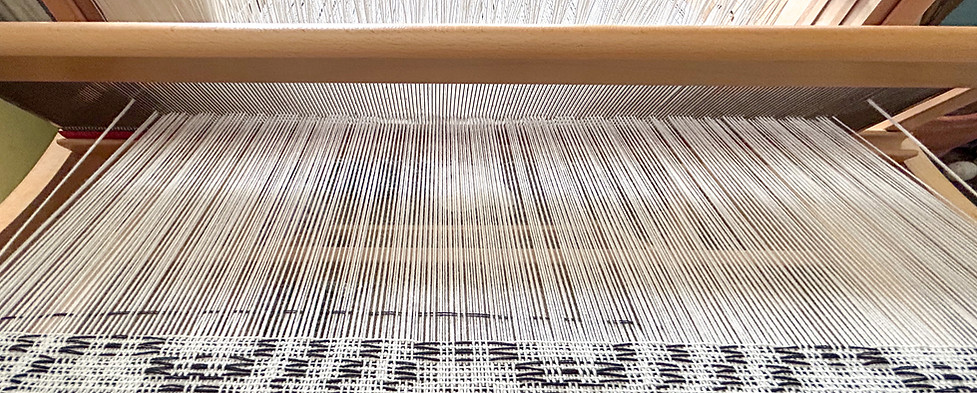
The pioneering textile artist and Bauhaus educator Anni Albers approached this realization from another direction. Rather than treating materials as passive recipients of human intention, she insisted that every material possesses its own character, its own language, and its own possibilities. Good weaving begins not by imposing an idea upon fiber, but by listening carefully enough to discover what the material is prepared to become. What does cotton desire that wool rejects? What does silk allow that rayon never could?
Listening, in other words, precedes making.
The lesson extends well beyond weaving.
Wood has grain. Clay has memory. Dough responds to weather. Gardens answer to subtle variations of seasons rather than schedules. Organizations develop cultures that resist being redesigned by decree. Children become themselves according to no blueprint but their own. Every medium possesses its own integrity.
Every medium pushes back.
The political philosopher Jane Bennett gives language to this experience in Vibrant Matter, arguing that the material world participates more actively in human affairs than we often acknowledge. Matter is never simply inert. It possesses tendencies, capacities, and forms of agency that resist becoming mere extensions of human will.
Anyone who has spent meaningful time making something already knows this. Reality insists honesty upon us.
The board tells us whether the cut was true. The loaf tells us whether we understood fermentation. The relationship tells us whether we have actually listened. The institution tells us whether its culture has become healthy.
Resistance becomes one of the few remaining places where self-deception begins to lose its footing. We cannot avoid our limitations. Neither can we miss the satisfaction of genuine accomplishment. Both become visible because the world refuses to become merely what we wish it to be.
No tension, no music.
Literally.
Only strings stretched just so become capable of song. Pulled too tightly, they snap. Left too loose, they fall silent. Somewhere between insistence and resistance, vibration becomes music.
The same could be said of a life.
Much contemporary language encourages us to think of identity as something hidden within us, waiting to be discovered, or something entirely of our own invention, waiting to be expressed. Craft offers another possibility. Identity emerges through participation.
We come to know who and what we are through what we intend and what we do.
Or do not do.
Or cannot yet do.
Or hope, next time, to do a little better.
This is why, when looked for, craft appears outside the workshop so often. The same dynamic appears wherever intention encounters a world that answers back. In kitchens and classrooms. In gardens and boardrooms. On stages and around dinner tables. Every parent, every teacher, every athlete, every leader eventually discovers that they cannot simply do exactly what they want exactly how they want. Rather than seeing this as a problem to solve, it is better understood as the workshop of our lives.
This is where craft reveals its deepest truth. We often assume the purpose of making is to produce well-made things. Yet the object is only half the story. Alongside every finished piece stands another creation, one far less visible. The maker has also been formed through the discipline of attention, patience, judgment, humility, and care. The work leaves its mark upon the worker.
We make and are made.
Manchester Craftsmen’s Guild bears an unusually old name. Historically, guilds preserved techniques and standards of excellence, but they also formed people. Skill and character belonged to the same conversation. Knowledge passed from one generation to the next through shared labor because making something well and becoming someone capable of making it well were never separate pursuits.
This inheritance feels increasingly urgent. As more of life becomes frictionless, instantaneous, and algorithmically mediated, we risk mistaking ease for flourishing. Yet a life without resistance offers few opportunities to discover either our limitations or our capacities. It leaves us efficient, perhaps, but often hollow, unchallenged, and unsure of our capability.
Craft reminds us that tension is not a problem to overcome. It is the fabric of being itself.
The world will always answer back, sometimes “yes,” sometimes “no,” and most often, “almost, but not quite.”
That resistance is not the opposite of creation. It is the condition that makes creation possible. Perhaps that is why workshops and studios and classrooms have always been about more than the things they produce. They are places where human beings practice the never-finished work of becoming.