ENGINEERING THE FUTURE OF FOOD

Bidwell Training Center’s greenhouse is undergoing a major renovation, one that will transform it into a beacon of urban food production and a pivotal extension of Bidwell Training Center’s facilities.
After years of fundraising, envisioning, and planning, Bidwell has officially begun work on a project that will expand educational opportunities, introduce advanced agricultural technologies, and strengthen connections between workforce training and community impact.
The renovated greenhouse will support a broader vision for applied plant science education. While ornamental crops will remain an important part of the program, the updated facility will introduce food production capabilities and expose students to technologies that are increasingly shaping the future of agriculture.
International Partnership
Helping make that vision possible is a partnership with LocalDutch, a Netherlands-based company focused on creating scalable models for community food production. Led by entrepreneurs and innovators Maurice van der Knaap and Arne Spliet, LocalDutch was created to address a challenge they encountered repeatedly throughout their careers: communities that wanted access to fresher food but lacked practical, sustainable ways to produce it locally.
For van der Knaap, Pittsburgh is an ideal place for that vision. Despite being surrounded by rich agricultural regions, many city residents rely on produce that has traveled long distances through the national food supply chain, and many neighborhoods remain underserved by fresh-food retailers. “Pittsburgh has a huge community with a lot of food deserts,” van der Knaap says. “You can ship food from anywhere, but why not grow it in the community, for the community?”
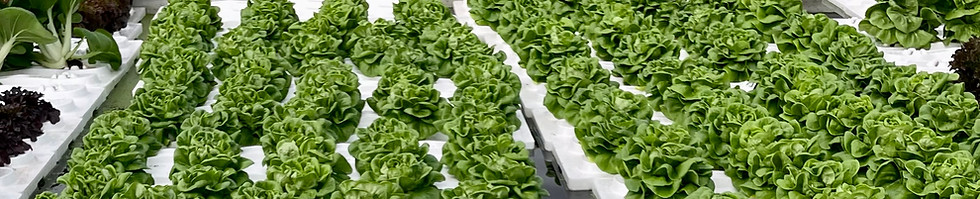
The LocalDutch system utilizes a specialized form of hydroponics known as dry hydroponics, which is designed with an air gap between plants and the growing medium, encouraging them to develop stronger root systems before they reach mature growth stages. “We discovered that when you make it slightly more challenging for a plant, you will get a better quality product,” van der Knaap explains. All this is done while using less space than traditional growing methods, an invaluable advantage in the balancing act of urban agriculture.
The system is also able to support a much wider range of crops than the lettuce varieties commonly associated with hydroponics. “A lot of hydroponic systems were really nice with small heads of lettuce,” van der Knaap explains, “We have discovered with dry hydroponics, we can also grow endives, garlic, kale, kohlrabi, spring onions, and specialty greens.”
Van der Knaap’s experience spans decades of controlled-environment agriculture projects throughout the United States, but he believes small-scale growing offers our community unique advantages.
“The concept is simple. We want to grow what is needed, where it is needed,” van der Knaap says. “By producing food at the community level, you can remove much of the supply chain and provide fresher food while creating opportunities for education and workforce development.”
Social Enterprise and Education
Greenhouse construction is projected to be completed later this year, with growing operations resuming as students and staff develop the new production systems together. For Bidwell students, the project creates opportunities to engage with modern agricultural technologies, data-driven growing strategies, food production logistics, and the business side of controlled-environment agriculture.
One of the most significant educational benefits is the expansion of what students will be able to grow and experience firsthand. “We’re going to expand into a combination of ornamental and food-crop production,” says Senior Director of Horticulture and Agriculture Technology, Dr. Ryan Gott. “Students will learn scientific concepts that apply to both fields, and they’ll also learn how those concepts make sense in the work they’re doing every day.”
A key component of the LocalDutch system is a proprietary software platform that monitors growing conditions and helps determine watering schedules and other environmental factors throughout the production process. “We’ve developed algorithms that help manage the growing process,” van der Knaap explains. “Students will be able to learn how the system works, challenge the recommendations, and understand the relationship between technology and plant health.” Bidwell students will have opportunities to compare their own decisions against the system’s defaults and better understand the science behind successful crop production.
The educational opportunities also extend to the Culinary Arts program. As food production expands, Bidwell’s catering, teaching, and daily meal production will be able to source food grown seconds away, rather than states. “We can create a really unique interface with Culinary Arts,” Gott says. “Their students can see how food is produced, and our students can experience what it looks like to grow for a customer. It closes that last part of the food-system education process.”
The project’s long-term vision for serving Pittsburgh communities includes a flexible space at the front of the greenhouse that could eventually support classroom learning, community engagement, and a retail component. “We want this to be more than a greenhouse,” Gott says. “It can become a place where people learn about growing food, where students share their expertise, and where the community can connect with the food system in a meaningful way.”
Cultivating a Community
LocalDutch co-founder Arne Spliet sees that community impact as one of the partnership’s greatest strengths. “Bidwell gives everybody a chance to learn,” Spliet says. “That’s something that personally drives me as well. Impact comes from sharing knowledge. When students graduate and take what they’ve learned into their careers and communities, that’s when the real multiplier effect happens.”
For Spliet and van der Knaap, Pittsburgh was a natural place to launch the concept. Both point to the city’s history of reinvention, strong educational institutions, and growing interest in local food systems as reasons for optimism. “Pittsburgh is a city that likes to reinvent itself,” Spliet says. “People roll up their sleeves and get things done. We felt that energy immediately, and Bidwell was the perfect partner because education and opportunity are already at the center of what they do.”
As construction progresses, the greenhouse stands as a symbol of where Bidwell Training Center is headed: embracing innovation while remaining rooted in its mission of creating opportunity. When the project is complete, students will gain access to new technologies, new learning experiences, and new career pathways. At the same time, the greenhouse will help demonstrate how education, agriculture, and community investment can work together to create lasting impact.